Buying guide
Types of TV wall mounts — fixed, tilting, full-motion, ceiling
Quick answer
Four families cover the market: fixed (low-profile, 1–2 in off the wall), tilting (5–15° downward), full-motion (extends 15–25 in, swivels, tilts) and ceiling (pole-hung). Every one of them bolts to the same VESA holes — so first confirm your TV's pattern and stand-free weight in the VESA Checker, then pick the motion you actually need. How high the screen sits matters too: see mounting height.
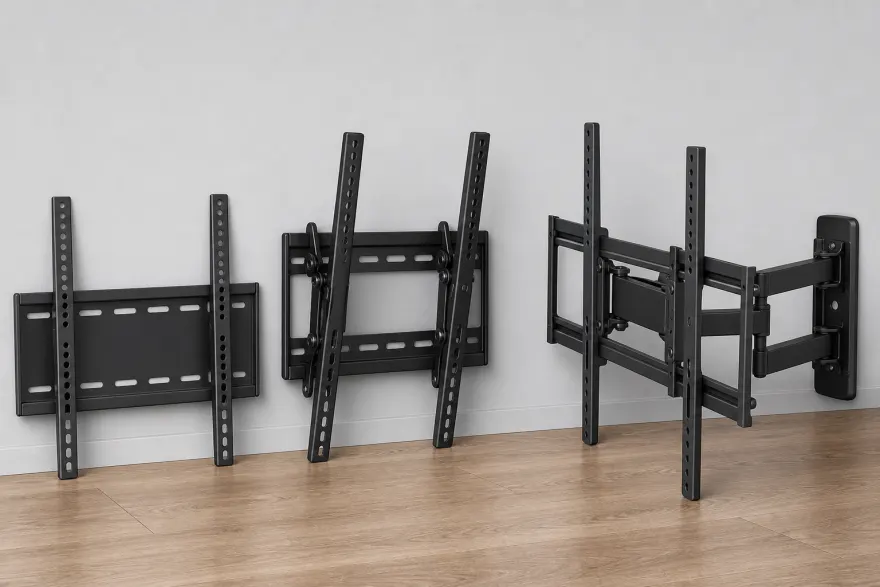
The four types compared
| Type | Profile off wall | Motion | Stud needs | Best for | In our database |
|---|---|---|---|---|---|
| Fixed (low-profile) | 1–2 in | None | 1–2 studs by size | Eye-level, straight-on viewing; the slimmest look | 5 mounts, rated 88–132 lb |
| Tilting | 1.5–3 in | 5–15° down | 1–2 studs by size | Screens above eye level; glare control; bedrooms | 4 mounts, rated 115–150 lb |
| Full-motion (articulating) | 2–4 in folded | Extends 15–25 in, swivels ±45–90°, tilts | Usually 2 studs at 55″+ | Corners, multi-seat rooms, reachable cables | 6 mounts, rated 44–132 lb |
| Ceiling | pole length | 360° swivel, tilt, height-adjust | Ceiling joist (lag-bolted) | Open layouts, storefronts, walls that can't carry load | 2 mounts, rated 110–110 lb |
Ratings summarize the wall and ceiling mounts we track; each model page shortlists the ones that genuinely clear that TV's pattern, weight and size.
How to choose in three questions
- Where will the center of the screen sit? At seated eye level (~42 in) a fixed mount is ideal. Above it, tilt becomes valuable — the math is in the mounting-height guide.
- How many viewing positions? One sofa, straight on: fixed or tilting. Kitchen + couch + reading chair, or a corner install: full-motion earns its price.
- What can the structure carry? Articulating arms add leverage, so stud anchoring gets stricter as motion grows. No usable wall? A ceiling pole into a joist — or skip drilling entirely with a VESA floor stand.
Details people miss per type
Fixed
The 1–2 in gap makes rear ports tight — plan flat or right-angle cables before hanging the panel. Many fixed plates hook on rails, so a helper makes the lift safer. Recessed VESA holes (flagged on affected model pages) may need spacers even on a flat wall.
Tilting
Tilt range is quoted at the panel's top edge: 10° on a 65-inch panel moves the top roughly 5 in outward. Premium tilt mechanisms hold position by friction and can be adjusted after install without tools — worth it above a dresser or fireplace.
Full-motion
Check the folded depth (2–4 in) if the arm parks flat most of the time, and the arm's own weight rating at full extension, which is where the leverage peaks. Single-stud articulating mounts exist for smaller, lighter panels — our per-model shortlists mark which arms clear which TVs with the 20% margin.
Ceiling
Poles are height-adjustable in coarse steps; measure the drop you need before ordering. Lag-bolt into a joist per the manual — toggle anchors in ceiling drywall are never acceptable for a hanging TV.
Double-check before buying
- The mount's VESA range covers your TV's exact pattern — a "fits 37–70 inch" claim is about screen size, not the bolt pattern.
- Rating ≥ TV weight without stand ÷ 0.8 — the Will It Fit checker runs the math with reasons.
- Hardware kit covers your TV's thread (M4/M6/M8) and any spacers the model needs — see the screw-size guide.
Frequently asked questions
Which TV mount type is best?
The one that matches how the room is used. Straight-on sofa viewing at eye level: fixed (slimmest and cheapest). Screen above eye level, or glare from windows: tilting. Corner placement, multiple seating areas, or cables you need to reach: full-motion. No usable wall at all: a ceiling mount or a VESA floor stand.
Are full-motion TV mounts safe?
Yes, when the rating and the anchoring are respected. An extended arm multiplies leverage on the wall fasteners, which is why most full-motion mounts for 55-inch-plus TVs require lag bolts into two wood studs. Follow the mount's stud spacing exactly and keep the TV at or below 80% of the rating.
Do tilting mounts reduce glare?
Noticeably. 5–15 degrees of downward tilt re-aims the panel away from windows and ceiling lights, which is most useful when the screen sits above eye level — bedrooms and above-fireplace installs benefit the most.
How far does a full-motion mount extend?
Typical arms extend 15–25 inches from the wall and fold back to 2–4 inches. Extension trades against stability and price: longer arms need beefier construction, stronger anchoring, and cost more. Check the folded depth too if you want a near-flush look.
Does the mount type change the VESA pattern I need?
No — pattern and type are independent. Any type must simply cover your TV's bolt pattern in its supported range and beat the stand-free weight by a 20% margin. Look your model up first, then choose the type; the Will It Fit tool checks a specific pairing.
Sources
- Motion and profile ranges summarize the manufacturer listings of the mounts tracked in our database; each mount card links its specific ratings.
- Per-model TV patterns and weights are cited on each model page from manufacturer documentation.
Ready to test a specific pairing? Run your TV and a bracket through the Will It Fit checker, or start from the VESA Checker if you only know the model number.